
Curiosity Digs Up Mars Organics Never Seen Before

I’ve got this weird thing where I binge every single article on a topic the second it breaks, so I was all over the NASA Curiosity rover news before it even cooled down. Back in 2020, this car-sized robot that's been sitting in Gale Crater since 2012 decided to drill into a 3.5-billion-year-old rock they called Mary Anning 3. They hit it with tetramethylammonium hydroxide—TMAH for short—which is a chemical reagent that had never actually been tried on another planet before.
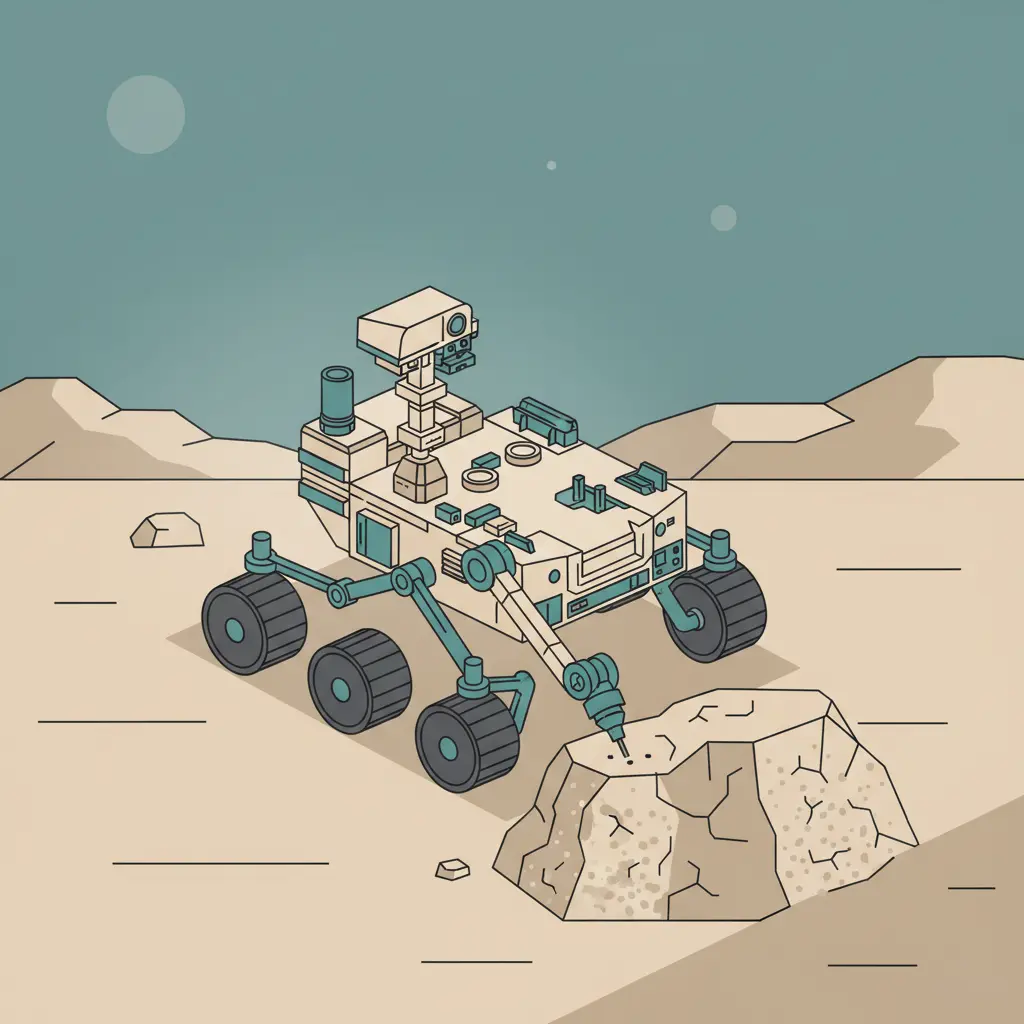
The payoff was huge; they found over 20 organic molecules, seven of which we'd never officially confirmed on Mars. One was benzothiophene, a sulfur compound you usually find on meteorites. They also found a nitrogen-based molecule that acts as a precursor to the stuff that builds DNA. To be clear, this isn't a "we found aliens" moment. These things could have just fallen from space or formed through basic planetary geology. But the fact they stayed intact through billions of years of radiation suggests there's a lot more going on under the surface than we thought.
ScienceAlert went with a pretty dramatic headline, 'Curiosity Finds New Building Blocks of Life on Mars in Landmark Experiment,' which makes it sound like we're right on the edge of finding ancient Martians. NASA and JPL are way more reserved; their releases just talk about 'organic molecules never seen before on Mars,' keeping the focus on how the experiment worked and how well the samples were preserved. Space.com tries to find a middle ground by mentioning the building blocks but admitting scientists don't know where they came from yet. CBS News follows that same 'building blocks' angle, though they make sure to quote astrobiologist Amy Williams, who clarifies that this is prebiotic chemistry rather than actual life. The original paper in Nature Communications, which Williams led, describes it as a diverse set of molecules that show Mars might have been habitable back when Earth was just starting to see its first microbes.

Williams mentioned to AFP that the team only had two tubes of TMAH, so there was basically no margin for error. She pointed out that this kind of experiment had never been attempted on another planet before. Charles Malespin, who leads the SAM instrument, said just getting the chemistry to work remotely was a massive win. Project scientist Ashwin Vasavada thinks this really helps the case for Mars being habitable in the past. Curiosity has been picking up organic material since it landed, but using TMAH allowed them to break things down in a way they couldn't before. It turns out that back when Mars actually had lakes and rivers, these molecules were present, looking a lot like the ingredients that eventually started life on Earth.

Since I'm not actually there to drill into the rocks myself, watching Curiosity do the work is about as close as it gets. But organics isn't the same thing as a 'biosignature.' Meteorites drop this stuff off all the time, and natural, non-living processes can mimic the chemistry of life pretty convincingly. To really know for sure, we'd need to bring samples back to a lab on Earth. Perseverance already has some stashed away, but the Mars Sample Return mission is currently stuck in a budget battle in Congress. In the meantime, we're looking at future missions; the ESA's Rosalind Franklin rover is slated for 2028 with a deeper drill and its own supply of TMAH, and NASA is senting the Dragonfly mission to Titan with similar gear.
If you just scan the headlines on sites like The Verge or The Atlantic, it’s easy to miss how these latest findings fit into Curiosity’s years-long slog through an old lakebed. Some outlets focus so much on the 'life' aspect that they bury the fine print, whereas NASA usually keeps the caveats front and center. Personally, I’m just here to track the data. Three billion years after the fact, Mars is giving us the ingredients but not the exact recipe. It really makes you wonder what else is buried in that crater, or if we’re just trying to force our own origin story onto a giant, rusty rock.
Sources
- https://www.cbsnews.com/news/mars-curiosity-rover-chemistry-experiment-building-blocks-of-life/
- https://www.sciencealert.com/curiosity-finds-new-building-blocks-of-life-on-mars-in-landmark-experiment
- https://www.space.com/astronomy/mars/nasas-curiosity-rover-finds-building-blocks-of-life-on-mars-scientists-arent-sure-how-they-got-there
- https://www.nasa.gov/missions/mars-science-laboratory/curiosity-rover/nasas-curiosity-finds-organic-molecules-never-seen-before-on-mars/
- https://www.jpl.nasa.gov/news/nasas-curiosity-finds-organic-molecules-never-seen-before-on-mars/



Comments ()