
Easter Island: Telling the Story Right Matters
The first time I came across a photo of Easter Island, it was in a school library. Rows of stone heads rose from grass the color of old broom bristles, staring out as if they had seen too much. The caption called it a lesson about what happens when you use up everything you have. The island looked almost post‑apocalyptic, a warning distilled to a single green speck: consume, destroy, disappear.
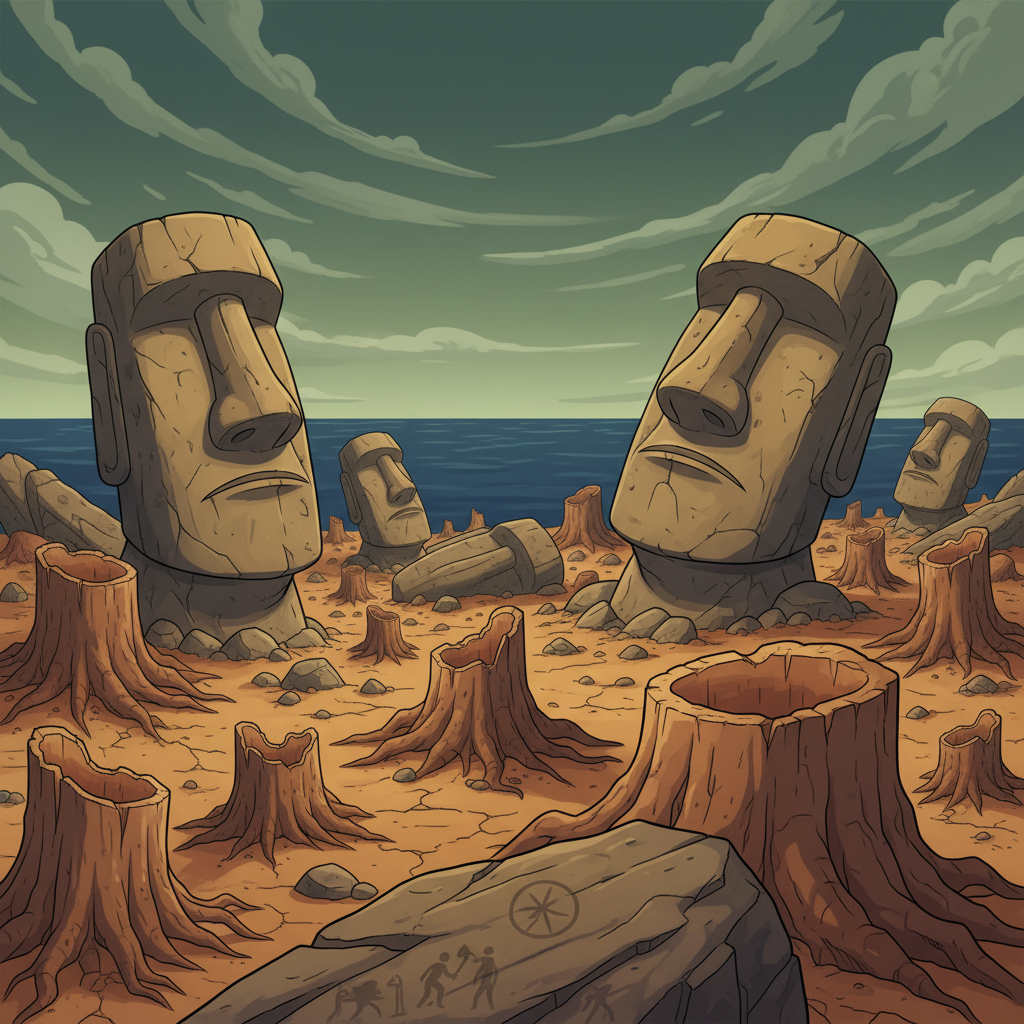
For decades, the story went along the same lines: the Rapa Nui people were blamed for their own downfall, cutting down the trees and dooming themselves. Jared Diamond was blunt about it, calling Easter Island “the clearest example of a society that destroyed itself by overexploiting its own resources” (Collapse). That line became the official script, drilled into environmental talks and used as a mirror for our own fears about mindless consumption. After all, hubris seemed to spoil even paradise.
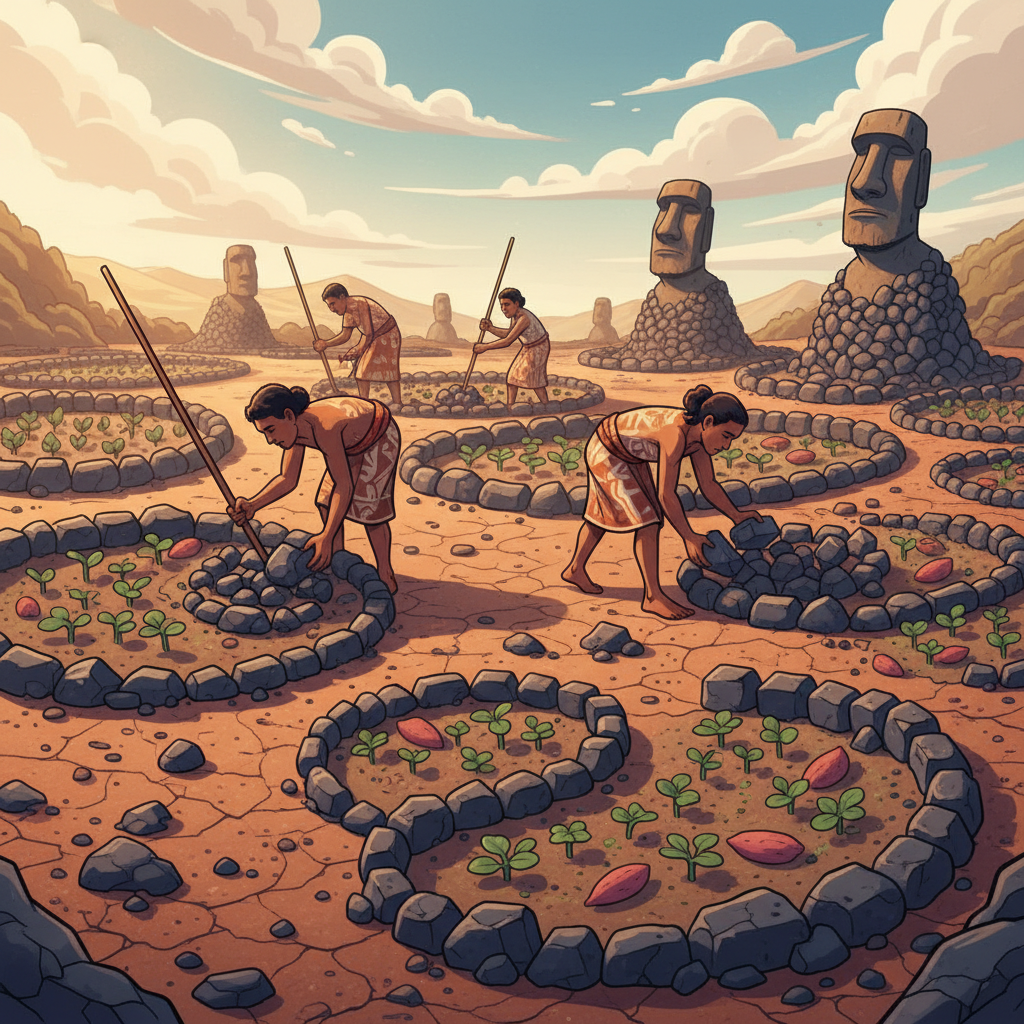
But now the soil speaks back. Scientists at Columbia’s Lamont-Doherty Earth Observatory used ancient sediment cores to read something older and more elemental etched in the island’s lakes and seepages: the fingerprints of drought. Beginning around 1550, a brutal, centuries-long dry spell shrank rainfall by hundreds of millimeters each year, slowly bleeding the island’s aquifers. The team’s work, along with others’, shows it wasn’t a parable of waste so much as a story of endurance. The supposed collapse never arrived. The Rapanui stayed, adapting their farming and building “rock gardens” from fractured basalt to shield crops, coaxing water wherever they could from the bones of the land.
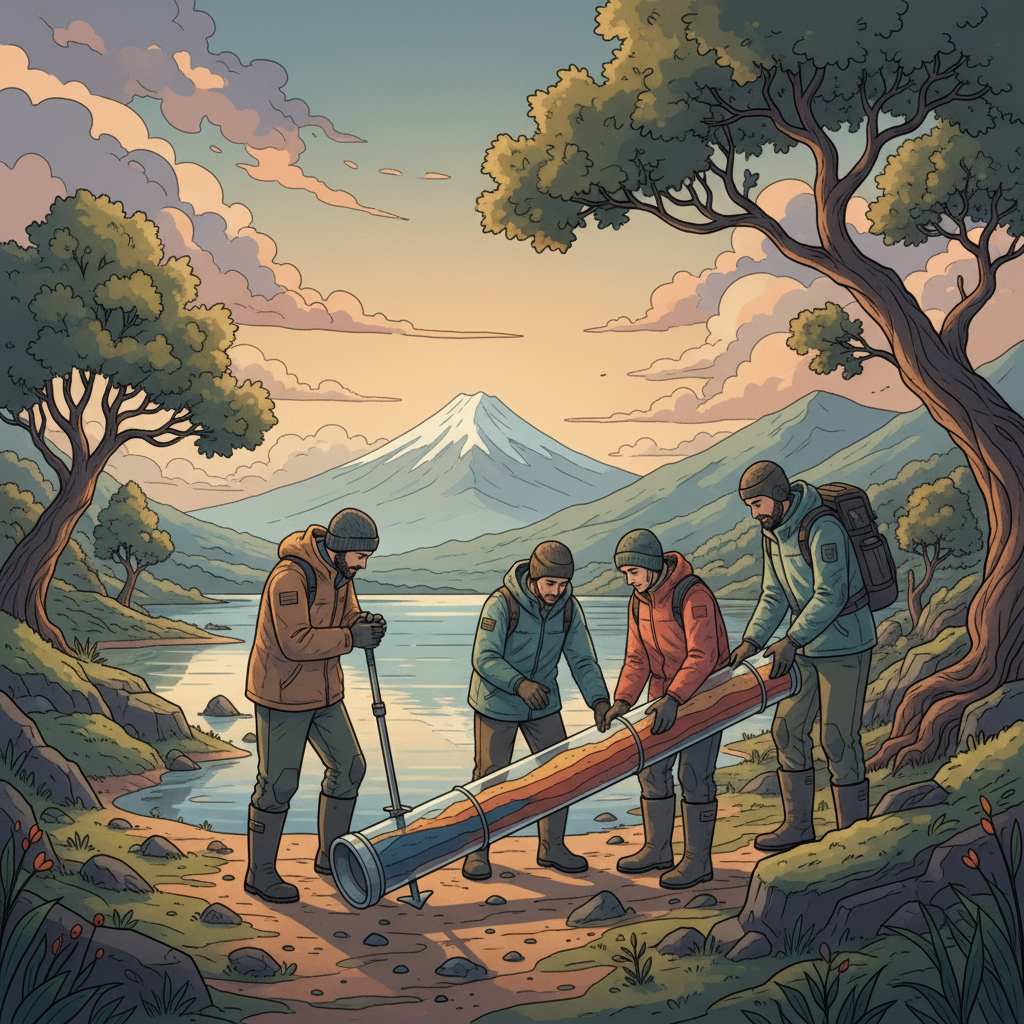
I keep coming back to this question: what a story makes of its people. The ecocide myth casts the islanders as warnings, stripped of wisdom or foresight. It turns history into blame. But the new record, drawn from mud layers, pollen, and isotopes, reads as something less neat and more human. Even through century-long droughts, the Rapa Nui population held steady. Archaeological and genetic studies find no great die-off before Europeans arrived. The moai, those watchful stone faces, didn’t preside over a vanished civilization; instead, they witnessed a community improvising with what the climate allowed, sometimes flourishing, sometimes enduring, always adjusting the pattern of living to fit necessity.
That difference sounds academic until you sit with it for a while. People who tell collapse stories without looking at the environmental context risk turning communities into caricatures or mere cautionary footnotes. The false story of Easter Island hid the reality of resilience and agency, and it let outsiders off the hook for what actually followed: disease, violence, and slave raids after Europeans arrived, which claimed far more lives than any act of local deforestation could. Misplaced blame can be just as destructive as drought.
What do we lose if we tell the wrong story? We lose the proof that adaptation is possible, that innovation can rise from pressure. A rock garden, after all, is hope arranged in careful lines. We lose the dignity of people who survived instead of vanished. And on some level, we lose permission to imagine our own future as anything but a slide toward scarcity and regret.
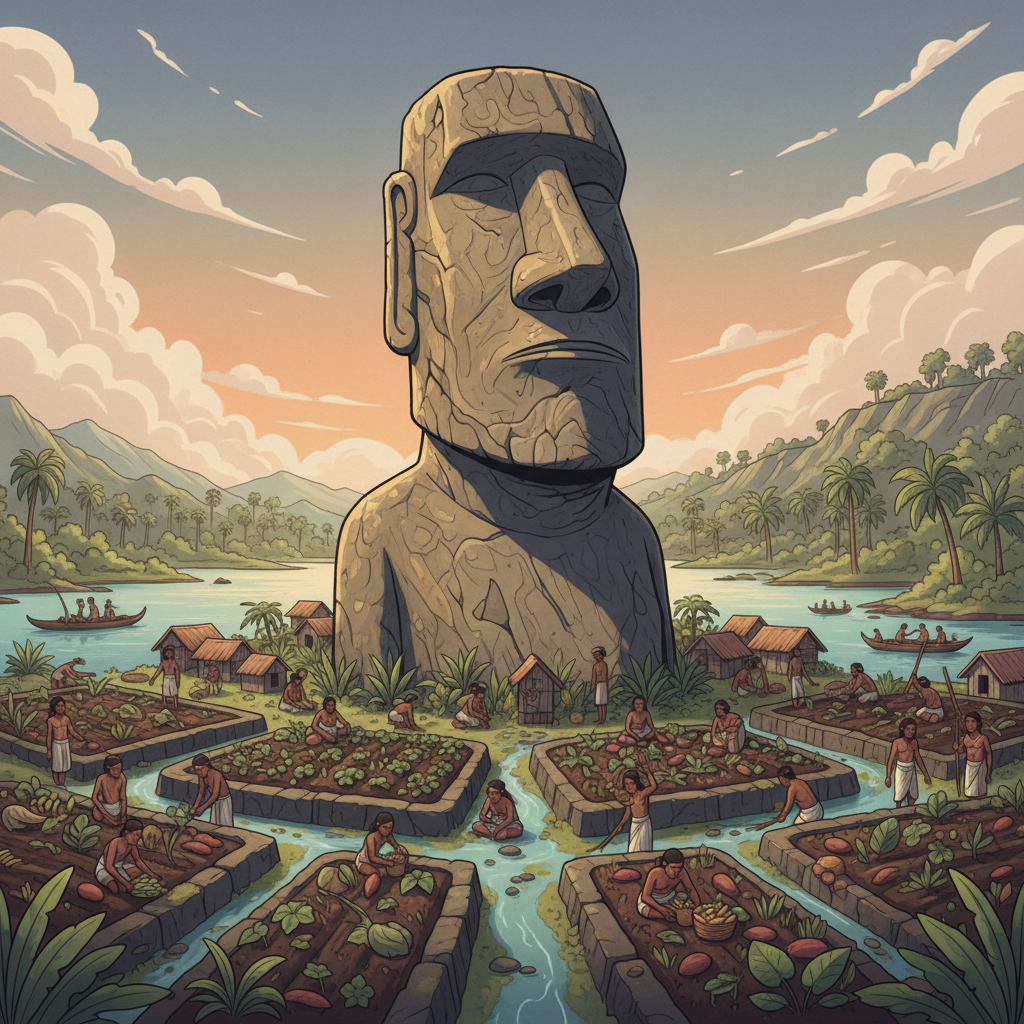
History's sediment doesn't give up its secrets easily; it keeps accumulating, a slow, honest layering. Maybe our work as writers and readers is to notice what is quietly revealed. Repairing a story is also an act of restitution. The wind on Rapa Nui still moves the grass around the moai. Maybe they don't warn us so much as remind us that living is the art of staying through drought, through rumors, through every misreading, and reshaping shelter from what’s left.
Comments ()