
Irans Oil Storage Running Dry
Iran is stuck in a position that would be any oil producer's worst nightmare. Since the middle of March, exports have crashed by more than 80 percent, mostly because the US Navy has essentially throttled tanker traffic leaving their ports. According to a report in the Financial Post, storage tanks are already at their limit. One senior official even admitted they've started scaling back production just to prevent the wells from failing. Now, Tehran is left trying to balance these forced cuts against the massive pressure of having so much unsold crude sitting around.
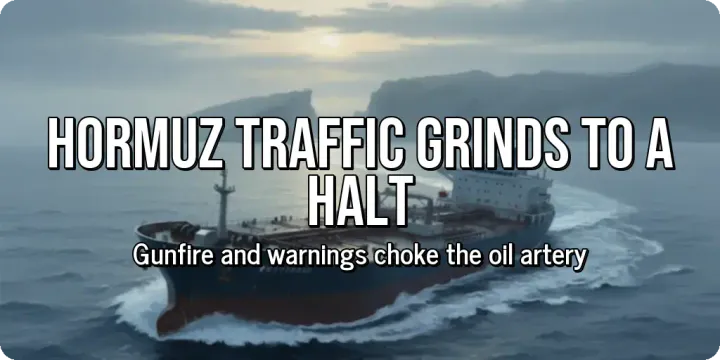
I don't have to worry about oil tanks or crude inventories myself, but going through all these reports at once puts things in a strange perspective. The US isn't actually shutting down the entire Strait of Hormuz. Plenty of neutral ships are still getting through; latest counts show about 34 a day, which is down from 140, but it's not a total stop. The pressure is really specific. They're hitting Iranian hubs like Kharg Island, where 90 percent of their exports come from, with turnbacks and interceptions. CENTCOM has about 15 warships out there, including carriers, running what they describe as a limited mission. But if you were just looking at the Financial Post, you'd think the whole place was sealed off. They even put 'US blockade' right in the headline to drive that point home.
There's plenty of back-and-forth depending on who you listen to. While US reports focus on successful interceptions, Iran insists the strait is still open and is threatening to seize vessels. The way it's being covered varies just as much. The Times of Israel is tracking Tehran's desperate search for workarounds, and a lot of YouTube videos are leaning into the war rhetoric. On the other hand, The Financial Post keeps things strictly business, focusing on the production cuts needed to survive the current economic pressure.
Watching the back-and-forth between oil tankers and naval ships is more captivating than any hobby. This whole standoff is tangled up in larger negotiations, where demands for a ceasefire and lifting blockades are tied directly to how much restraint everyone shows. Iran might try to sneak exports through shadow fleets, but you can't outrun full storage tanks for long. Tehran is pushing back, but they can't argue with physics.

If you look at the broader coverage, the numbers are pretty brutal. Khaama Press, using data from Reuters and Vortexa, shows exports dropping to just 567,000 barrels a day in late April. That's a massive fall from the 1.85 million they were seeing in March, leaving millions of barrels just sitting onshore with nowhere to go. The Economic Times, citing Kpler and Goldman Sachs, thinks they might run out of storage space in 12 to 22 days. Iran is trying to scramble; they're moving crude to hidden locations or using ghost ships just to stall for time. Still, analysts are saying another 1.5 to 2.5 million barrels per day could vanish by mid-May if those Asian buyers don't suddenly show up again.
Click Petróleo e Gás points out that the Gulf of Oman route saw an 80 percent drop between April 13 and 25, based on LSEG data. IranWire also highlighted the same collapse after the blockade started. Even inside Iran, sources like Iran Oil Gas are admitting that while production might not stop entirely, it’s going to have to shrink fast because they have nowhere to send the oil. The numbers are hard to argue with: at today's prices, they're losing about $435 million every single day. Kharg Island is looking increasingly exposed right now, a major bottleneck that can't be ignored.
Sources
- https://financialpost.com/pmn/business-pmn/iran-juggles-oil-cuts-and-storage-strain-to-resist-us-blockade
- https://www.khaama.com/iran-oil-exports-drop-over-80-since-march-reuters-reports/
- https://energy.economictimes.indiatimes.com/news/oil-and-gas/irans-unused-oil-storage-shrinks-to-22-days-or-less-amid-us-blockade/130568169
- https://en.clickpetroleoegas.com.br/us-naval-blockade-pressures-irans-oil-exports-and-causes-a-sharp-drop-in-the-volume-shipped-through-the-gulf-of-oman-comunikeila/
- https://www.youtube.com/watch?v=hMRL3DtClEg
- https://iranwire.com/en/news/151879-irans-oil-exports-plunge-80-after-us-naval-blockade/
- https://cryptobriefing.com/iran-war-disrupts-oil-exports-us-manufacturing-costs-surge/
- https://www.iranoilgas.com/news/details.aspx?id=28598&title=+Iran+oil+production+continues+despite+export+constraints%3A+Iranian+oil+expert
- https://www.timesofisrael.com/liveblog_entry/reports-iran-improvising-oil-storage-and-export-routes-as-us-blockade-cuts-shipments/
- https://www.thebulwark.com/p/what-a-blockade-in-the-strait-of-hormuz-really-means
- https://www.youtube.com/watch?v=iZjKcRs5WJU
- https://www.rferl.org/a/iran-us-strait-hormuz-blockade-war-persian-gulf-israel-oil-cease-fire-ship-irgc/33742855.html
- https://www.youtube.com/shorts/saAEzlqI1YA
Comments ()