Sitting at the Kitchen Table with the WHO
A new WHO review again finds no link between vaccines and autism. But trust isn’t built from headlines. It grows in small, honest conversations at kitchen tables, where fear is named, questions are welcomed, and science meets lived experience.

On Tuesday night a mom sat at my kitchen table and cried into her tea. The house had that soft late-evening chaos: the dishwasher humming, the cat winding around chair legs, someone’s science project drying on the counter. Her phone lay flat between us, the screen lighting a headline about the WHO, vaccines and autism. “They say there’s no link,” she said, the last word lifting like a question. “How many times have they said that? How do I know this time?”
I read the WHO release. A global panel of vaccine-safety experts reviewed thirty-one major studies from the past fifteen years and, once again, found no causal link between vaccines and autism spectrum disorders. They reiterated conclusions from 2002, 2004 and 2012: childhood vaccines, including those that contain thiomersal or aluminum, do not cause autism. The UN's summary notes that decades of research from many countries and from large national datasets all point the same way. In short, vaccines are not the culprit parents have been taught to fear.[1][2][3]
If you're sitting at my kitchen table with your shoulders tight and your jaw clenched, a sentence full of statistics won't reach the scared part of you. Fear doesn't think in charts; it thinks in memories — a cousin's little boy who "changed after his shots," a Facebook group that felt kind at 2 a.m. when the baby wouldn't stop crying. It remembers every time an institution said "Don't worry" and later turned out to be wrong.
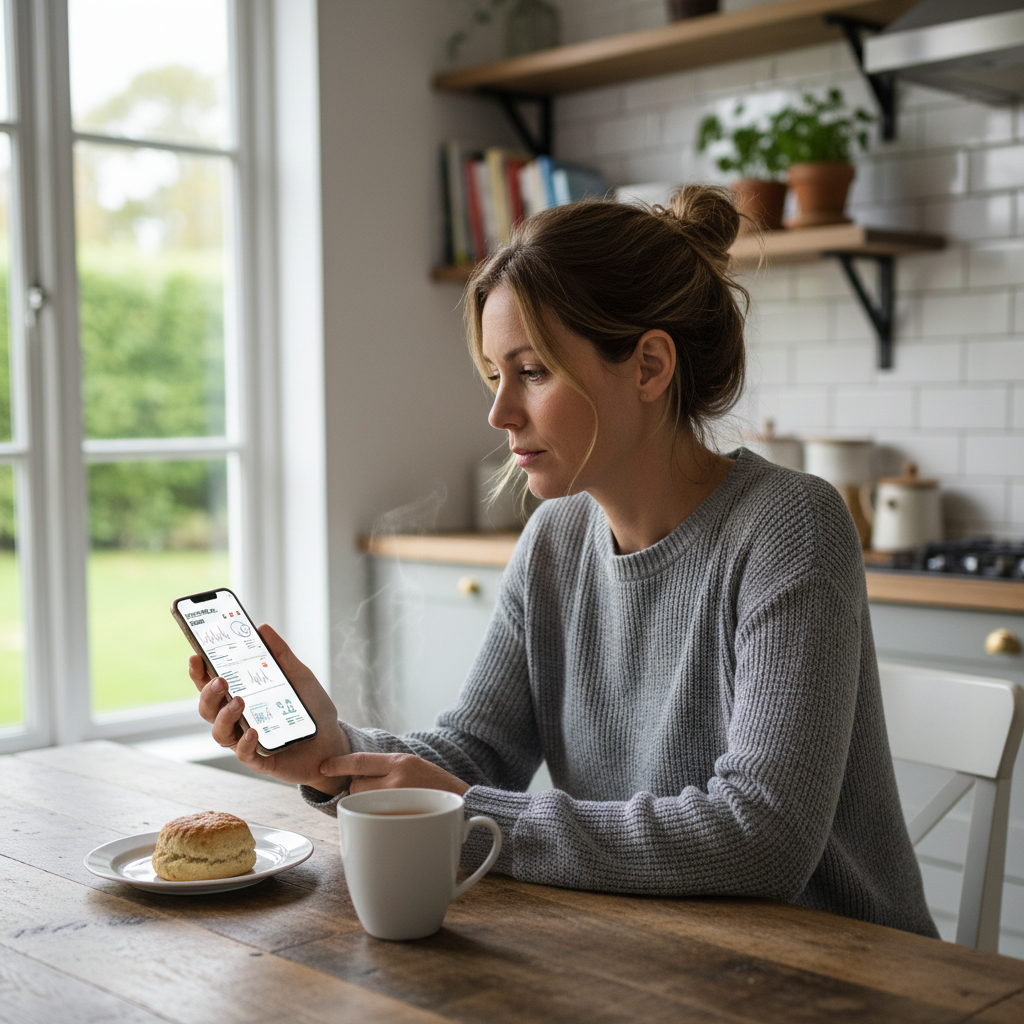
Most of the families I work with aren't reading WHO technical statements on a weeknight. They're scrolling through group texts from other parents, watching TikToks with ominous music, or clicking headlines that squash years of study into nine panicked words. So when the WHO’s Global Advisory Committee on Vaccine Safety repeats that vaccines don't cause autism, that conclusion lands in a noisy place; people have learned to be suspicious of governments, of drug companies, sometimes of doctors, and often of anything that sounds too confident.[3]
I see that wariness in the school office when a parent hangs back after enrolling a kindergartner. They lean close, voice low: “Do I really have to get all the shots?” I see it when a grandmother picks up a sick child and says she heard that “those new ones” are different. These aren’t careless people; they’re the ones who’ve been warned to be cautious and then left to make sense of a tangle of half-answers.
Trust for them doesn't start with a WHO logo. It starts much closer to home: whether the child's pediatrician looks rushed or actually sits down and breathes; whether the school nurse remembers their language and takes the trouble to get an interpreter; whether, at some point, anyone ever said "I'm sorry" for the ways the system failed. Those small acts are where trust takes root.

The mom at my table scrolled through the WHO article as we talked. She paused on the line that said the committee was made up of independent experts, then read that the studies came from multiple countries and included hundreds of thousands of children. She glanced at the dates: 1999, when the safety committee was formed; reviews in 2002, 2004 and 2012; and now again in 2025, all pointing the same way.[1][3] “So if this is settled,” she asked, “why do I keep hearing about that one paper?”
Her “one paper” was that since-retracted study that sparked the vaccines-and-autism scare years ago. It has been debunked again and again; the author lost his medical license, and major medical organizations called it fraudulent. Still, once a story like that settles into people’s bones as fear, it sticks. Corrections rarely travel as far or as fast as rumors.[2]
We didn't begin with a debunking; we began with her son. She told me what he's like when he's well and what the last high fever looked like. We talked about who in her family is immunocompromised and how many kids at school go home to babies or older relatives. We spread her calendar out and worked out when she could get to the clinic without missing a shift. Only after that did I circle back to the WHO statement and the earlier reviews, and I tried, as plainly as I could, to explain what “no causal link” means.
It didn't end with some movie-style declaration of faith in science. Life isn't an ad. What happened was small and quiet: she unclenched her hands, saved the WHO link to read later, and texted her sister, "I'm going to talk to the doctor again." She made an appointment, and more important than the date on the calendar was how she made it—this time with a little less dread. That's what reassurance actually looks like: not a total flip, but a slight turn away from panic and toward curiosity.
I think about all the kitchens I never get to sit in. I think of parents whose worry curdles into refusal because no one they trust stepped into the conversation before the fear grew loud. We label that reaction "vaccine hesitancy" and then treat it like a personal failing, when more often it’s a reasonable response to a long history of being ignored or harmed. That’s especially true for Black and brown communities, for disabled people, and for anyone who has watched a family member be dismissed by a clinician in a white coat.
The WHO's renewed statement matters, and so do the pediatric societies and local health departments saying the same thing. Together they're trying to patch holes in a boat we all happen to be in. Measles and whooping cough couldn't care less about your voting record. Trust, meanwhile, lives close to home: sometimes it's the cousin who works at the clinic; sometimes it's the school counselor who prints the article so you don't have to squint at it on a cracked phone. Or it's the pastor who brings a nurse after service and lets people ask questions without shame.
I don't expect families to read a UN press release and feel instantly calm. What I do hope is that we build better habits around these conversations: less eye-rolling when someone voices a fear; more questions that begin with, "What have you heard?" or "What's worrying you most?"; and public-health messages that sound like a neighbor, not a scolding parent. Small shifts like that make it easier for real conversation to happen.
If there's any small gift in the WHO revisiting the data, maybe it's an opening, a reason to sit down and talk it through again with the newest evidence on the table and our lived histories in the room. Say it plainly: vaccines do not cause autism. Add, too, that of course you want to be sure; let's walk through your questions one by one. At my house it starts with the kettle on, a chair pulled out and the cat nosing at someone's ankle. Big institutions speak from Geneva and New York, but the real work of trust still happens at kitchen tables like mine, one cup of tea at a time.
Sources and further reading: World Health Organization, “WHO expert group’s new analysis reaffirms there is no link between vaccines and autism,” December 11, 2025; UN News, “No link between vaccines and autism, WHO expert group reaffirms,” December 2025; WHO Global Advisory Committee on Vaccine Safety, statement on vaccines and autism, November 27, 2025.
Sources
- https://www.who.int/news/item/11-12-2025-who-expert-group-s-new-analysis-reaffirms-there-is-no-link-between-vaccines-and-autism
- https://www.un.org/sustainabledevelopment/blog/2025/12/who-expert-group-reaffirms-no-link-between-vaccines-and-autism
- https://www.who.int/news/item/11-12-2025-statement-gacvs-vaccines-autism


Comments ()